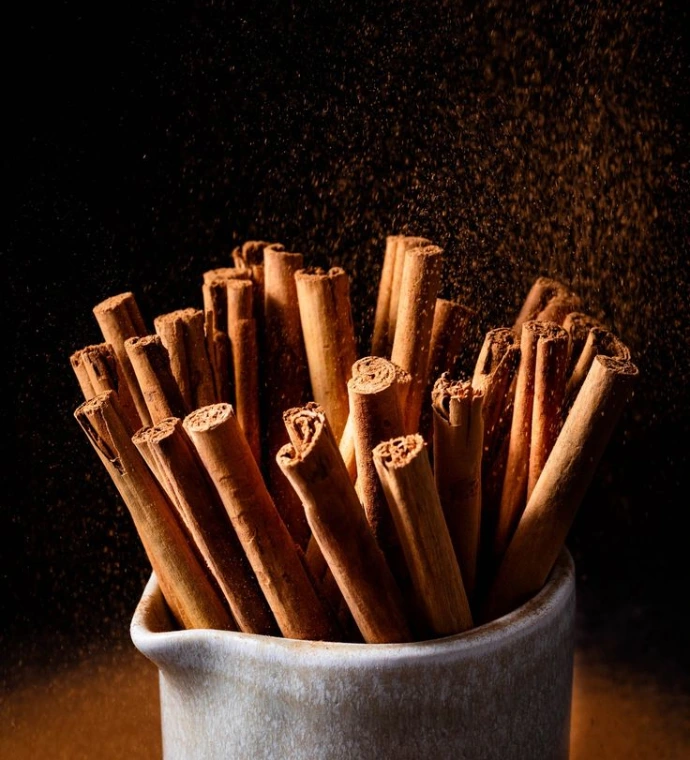
Cannella
The story goes that canella —a diminutive of canna (reed) in Latin— was once among the most prized gifts one could bestow upon kings and gods.
Its reputation grew so greatly that many merchants, eager to control its price and availability, wove elaborated tales about the perilous efforts required to obtain it, claiming it could only be found in remote, treacherous lands, guarded by fearsome beasts.
Beyond the mysticism spun by these early architects of trade, the ordinary person was encountering far more than an ingredient to flavour their meals; they were handling a substance celebrated for its healing, protective, and prosperity-enhancing properties.
Over time, traditional Indian medicine (Ayurveda) and Chinese medicine (TCM) recognised this cannella as both preventive and therapeutic, attributing to it the ability to increase internal warmth. This gentle heat, in turn, was believed to stimulate blood circulation and aid digestion, producing soothing, anti-inflammatory effects in those who partook of it.
One of my favorite ways to enjoy it is in an infusion of ginger, brightened with a splash of lemon and finished with a pinch of powdered cinnamon.
Across generations, many cultures have turned to these slender reeds as a form of protection for their homes—placing them at doors and windows, arranging them in bowls alongside elements such as myrrh, or tucking them into small pouches above lintels.
This material has likewise held a central place in countless rituals devoted to attracting abundance. Among the most common practices include carrying a small piece in one's wallet, burning the reed itself, or sprinkling a pinch upon a lit candle… Personally, I like to blow a trace of cinnamon across my doorway on the first day of each month.
In short, this element—once believed to repel the negative and draw in the positive—has survived to this day, though not without subtle transformation. Today, cinnamon is largely confined to decorative roles: wooven into Christmas wreaths or bound into fragrant bundles, allowing us, often unwittingly, to carry forward the heritage of our ancestors without fully understanding its original significance.
And so I find myself wondering: is it not worth listening to that which has endured across centuries, leaving quiet traces of its true value? Even in our scepticism, might we allow ourselves, just once, to be guided by curiosity, to experience, firsthand, some of these ancient customs?